


Does limewash work in Thailand’s humidity?
Yes, on the right wall. Lime handles humid air well, but it cannot fix a wall that is already wet.
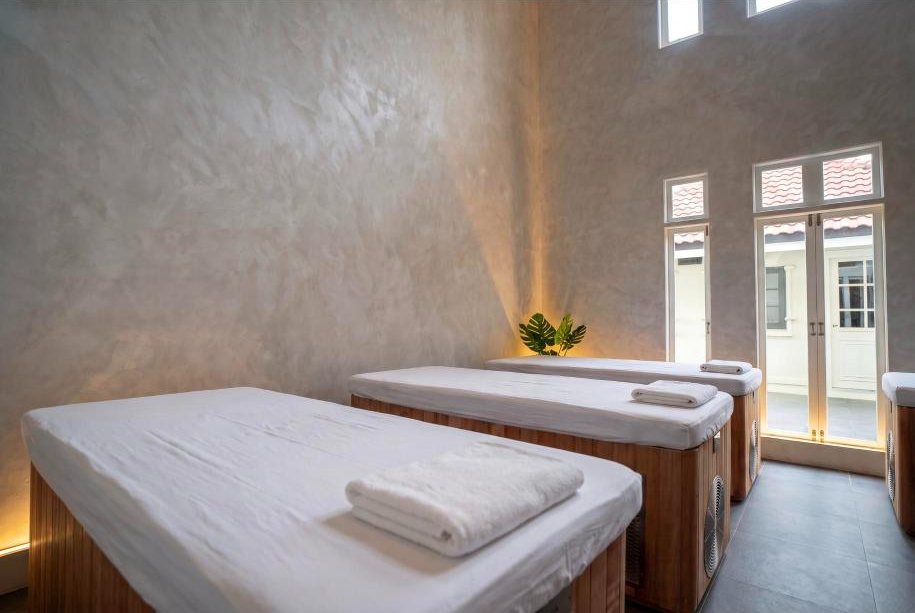
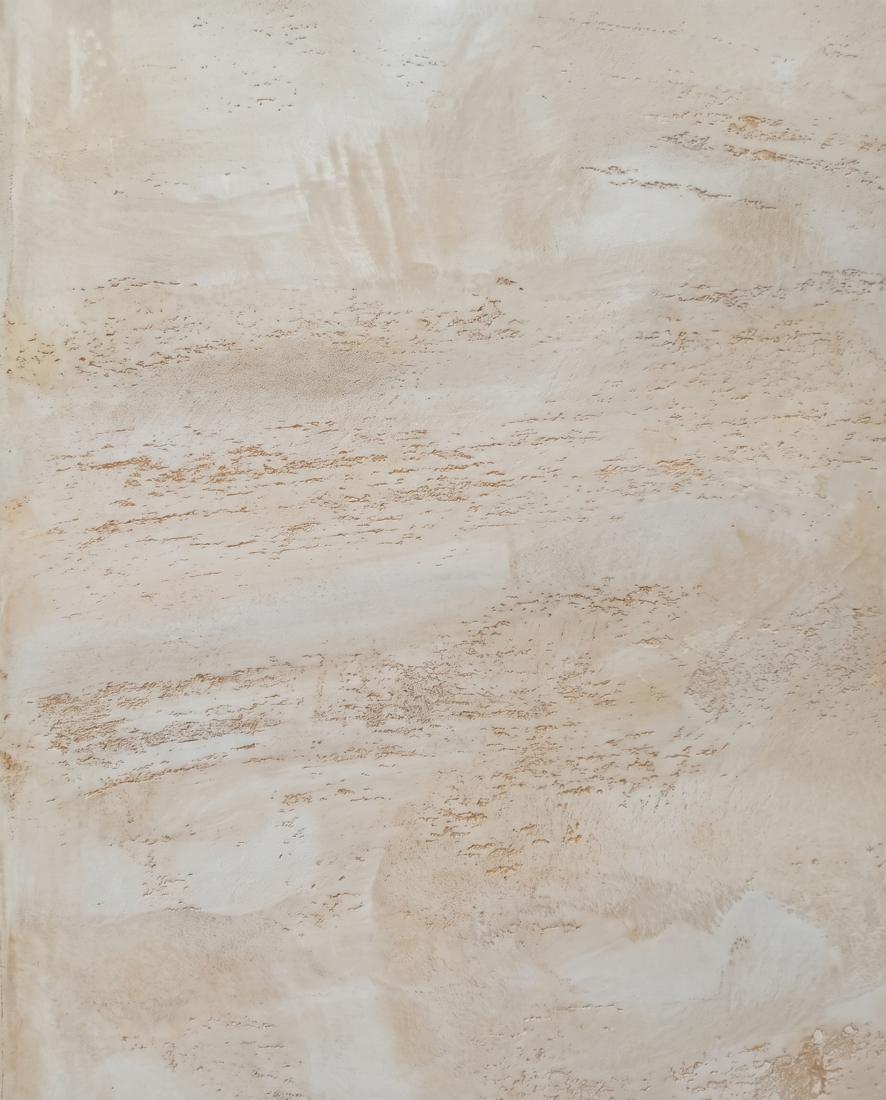
Limewash suits Thailand’s humid interiors because it lets a wall release moisture and its high alkalinity discourages mould. It works best on absorbent, sound, dry walls. It will not cure rising damp or leaks, and wet or exterior areas need a sealer.
Why humidity is the right question
Bangkok is muggy for about eleven months of the year, and August is muggy all of the time.1 Air conditioning adds another pressure, with cool rooms on one side of a wall and warm, wet air on the other. So a wall finish here has to deal with moisture every day.
What lime does well
Limewash is slaked lime and mineral pigment. It does not form a plastic film the way acrylic paint can.2 The Building Conservation Directory puts its vapour permeability at ten times or more that of modern resin paint.3 Moisture can leave the wall instead of pushing the coating off from behind.
Its high pH also acts as a mild fungicide.4 That gives it a real advantage in rooms that never quite dry out, though it is resistance, not immunity. Mould can still grow on dirt, on a sealer or on a constantly wet surface.
Air conditioning changes the picture
In a cold climate, moisture usually moves out of a building. In a hot, humid one with air conditioning, it moves inward. Warm, wet outdoor air is drawn towards the cooled room, and it can condense on whatever is cold and blocks its way.56
That is why the interior finish matters. A US government study modelled a wall in Miami with vinyl wallpaper on the inside. The surface of the plasterboard stayed above 80% relative humidity for around five summer months, a level where mould is considered likely. With only latex paint, the wall stayed below 80%, though the researchers called it marginal. Lower thermostat settings made things worse.5
Miami is not Bangkok, and a model is not your wall, but the lesson carries over. On outer walls of air-conditioned rooms, avoid vinyl wallcovering and other tight finishes, and do not run the air conditioning colder than you need. A more permeable finish gives the wall a way to dry.7
What it will not do
A breathable finish lets moisture pass, but it does not stop water getting in. Fix leaks, failed render and rising damp first. If salts are coming through a wall, they will come through limewash too.
Where to use it
| Area | Fit | Notes |
|---|---|---|
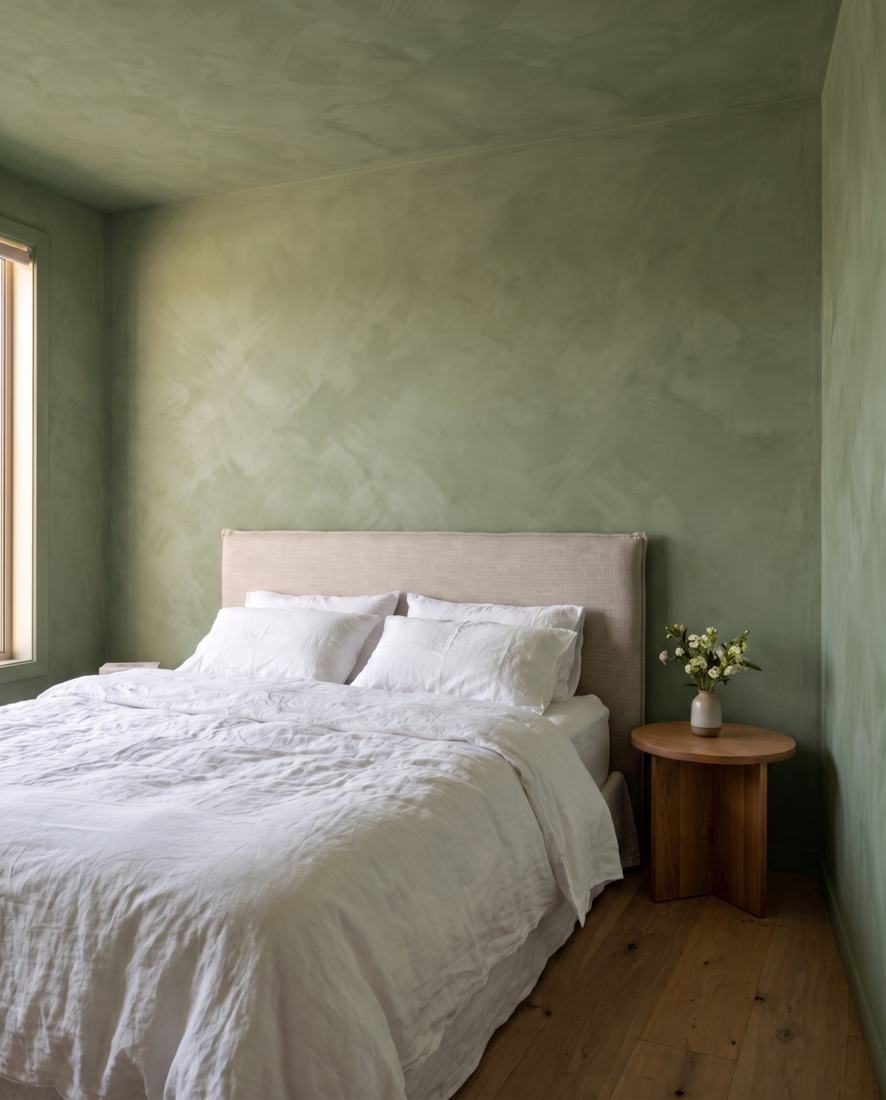
| Living rooms, bedrooms, lobbies | Very good | Best on absorbent plaster. Wax can be added indoors. |
| Spas and treatment rooms | Good with care | Keep it out of direct water, and ventilate well. |
| Bathrooms, away from the shower | With sealer | Use a sealer. Inside the shower, choose microcement. |
| Exterior walls | With care | Tropical driving rain wears limewash faster, and it streaks and fades.24 Use a sealer and plan to refresh it. |
| Floors, glazed tile, metal | No | Not suitable for floors or non-porous surfaces.4 |
Sealed walls: what can go wrong
Old buildings show what happens when walls cannot dry. Conservators link impermeable paints with blistering, peeling, mildew and salt damage, as moisture builds up behind the film.7 Limewash was the traditional answer because it is the most permeable of the common finishes.7 The same source warns that it cannot go over impermeable surfaces or modern non-porous paints.7
Three things to get right
The surface. Limewash suits brick, plaster and stone.3 Glossy or painted walls may need a suitable primer first, or the coat can fail through poor adhesion.3
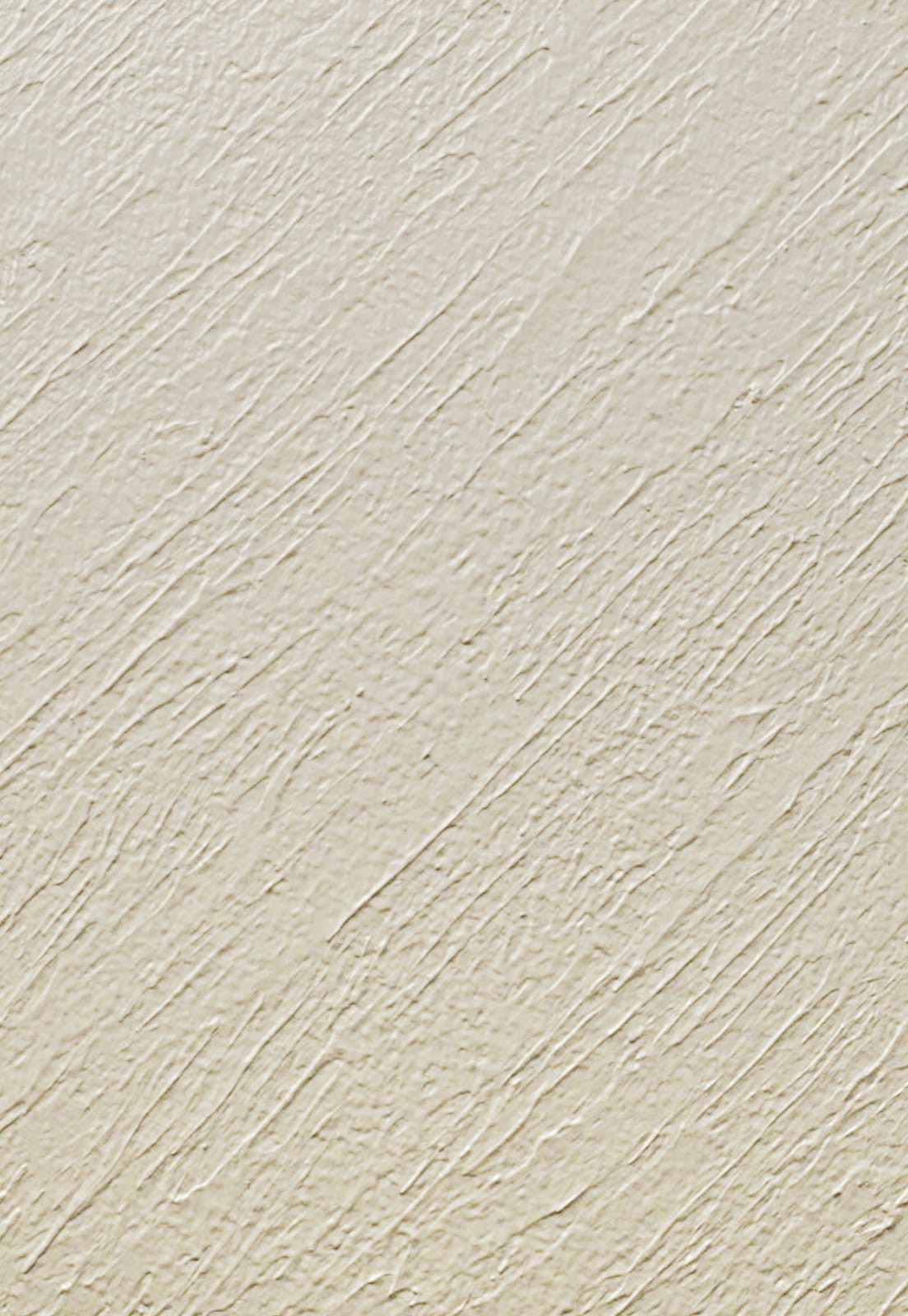
The application. Keep coats thin, because a thick coat can craze and crack as it dries.3 Kret brushes two or three coats with a block brush, in loose crossing strokes.
The colour test. Limewash dries lighter than it looks wet, and deep shades vary most.34 Always judge a sample on the real wall, once dry. It is also caustic while wet, so applicators need proper protection.8

What to expect on application day
Two coats is the usual approach, about 2–4 hours apart in one maker’s guidance. Work corner to corner without stopping mid-wall, so seam lines do not show. On later coats, a light mist of water helps the lime spread evenly.4
Do not judge the colour straight away. Wet limewash can look around four shades darker than it dries, and colour can keep shifting for days.4 More coats are not always better, because each one lightens the finish.4
Common problems and causes
| What you see | Likely cause | What helps |
|---|---|---|
| Lap lines | Stopping mid-wall4 | Keep a wet edge, corner to corner |
| Peeling | Impermeable surface below7 | Remove it, or use a suitable primer |
| Crazing | Coat too thick3 | Apply thin coats |
| Patchy colour | Uneven suction | Dampen the wall first3 |
| Damp stains | Water in the wall | Find the source first |
| Milky look on dark colours | Sealer4 | Sample the sealer on the colour |
Living with it
Limewash is matt and absorbent, and unsealed limewash is not washable like acrylic.9 Water can change its colour. In return, marks and tired walls can be refreshed with another coat, and you do not have to strip anything off first.
Sealers: what they do and do not do
One maker’s matte sealer is water-based and optional, used mainly in high-traffic areas. It is not waterproof, and it can leave a milky cast on deep colours.4 Kret specifies wax inside and a sealer in wet and exterior areas. Treat a sealer as light protection, not as a way to use limewash in a shower.
The short version for a Thai home
- Fix water first.
- Keep rooms ventilated, and do not over-cool them.
- Use limewash on sound, absorbent walls.
- Keep it away from direct water.
- Sample it on the wall, once dry, in your own light.
Questions
Does limewash stop mould?
It resists mould because of its high pH, but it does not stop it completely.4 Damp walls and poor ventilation still need fixing.
Can I use limewash in a bathroom?
Yes, away from direct water and with a sealer. For inside the shower, microcement is the better choice.
Can limewash go over existing paint?
Sometimes, with a suitable primer. Test a small area first, because glossy surfaces give it little to grip.3
Can I wash a limewash wall?
Not like acrylic paint. Dust it gently, and refresh it with another coat when needed.9
Is limewash good for air-conditioned rooms?
It suits them better than tight finishes such as vinyl, because moisture can still pass through. Good ventilation and sensible temperatures still matter.5
Sources
- WeatherSpark: Bangkok climate through the year
- JourneymanHQ: Limewash in humid climates
- The Building Conservation Directory: Limewash and Distempers
- Portola Paints: Lime Wash technical data sheet (2025)
- NIST: Moisture in walls in hot, humid climates (NISTIR 5558)
- Building America Solution Center: Vapor retarders in hot-humid climates
- The Building Conservation Directory: Interior decoration and permeability
- Rabart: Limewash data sheet (health and safety)
- Meoded Paints: Lime Wash technical data sheet
Hold limewash before you specify it.
Hand-made samples in your colours, delivered to your studio. For larger projects we trowel a full-size panel on site.
Order a sampleMore from the journal
Limewash vs paint: what is the difference?
Paint covers a wall. Limewash becomes part of it, and looks different for that reason.
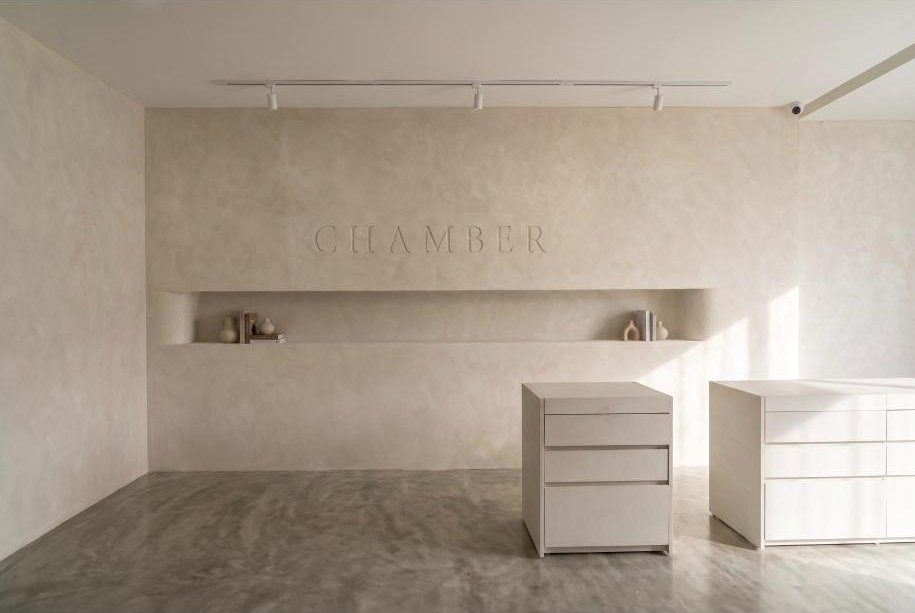
Limewash vs decorative plaster: how to choose
Both are lime-based, hand-applied and full of movement. One is a brushed coat, the other a trowelled layer.
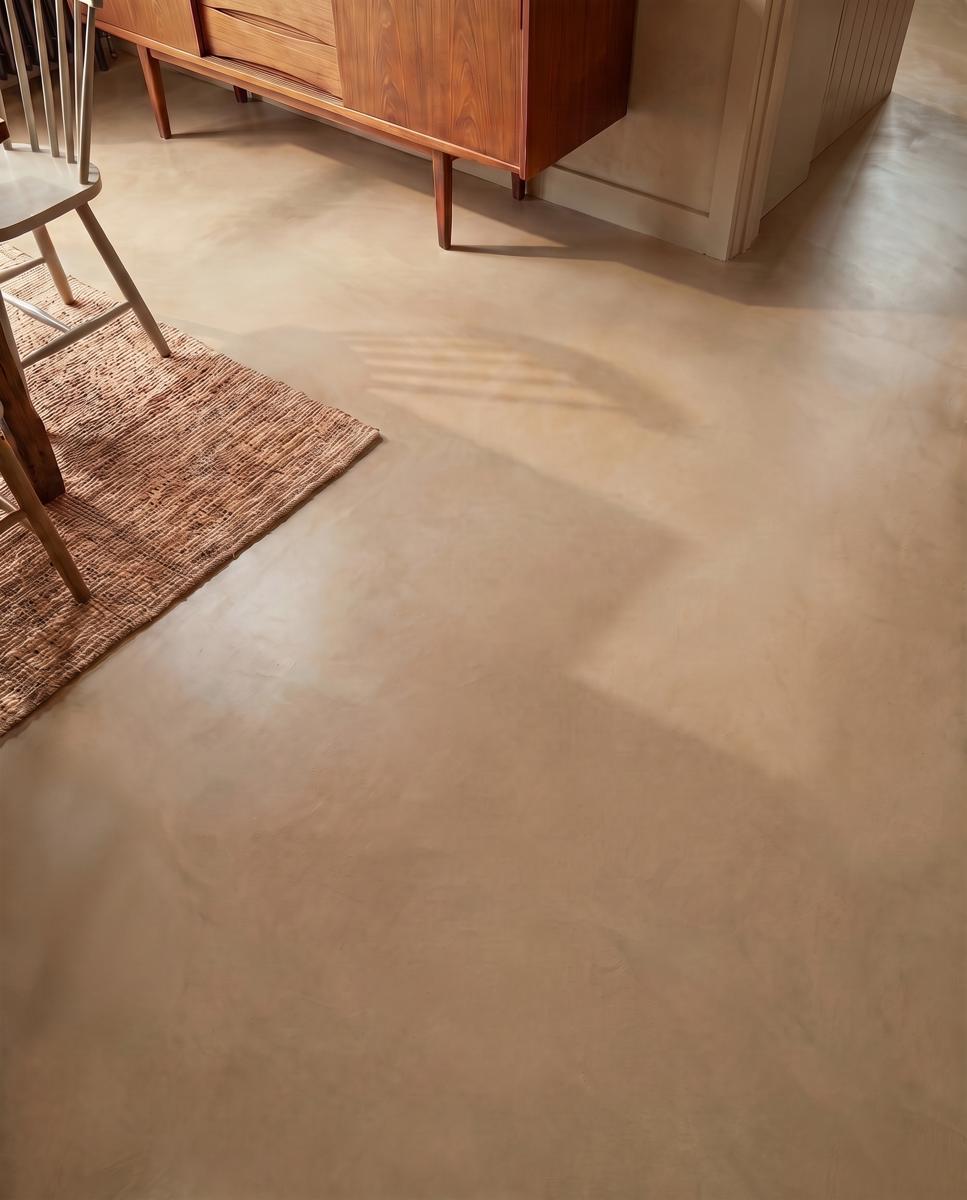
How much does microcement cost in Thailand?
The price is set by the room as much as the material. Here is what moves it, and what to check in a quote.